
City walk · City history · Decembrists & exile · Museums
The Decembrists and the History of Siberian Exile
The Volkonsky and Trubetskoy houses, Princess Trubetskaya’s grave and a city of exiled scholars
Photo: Aleksandr Zykov from Russia, CC BY-SA 2.0
- Duration
- 3.5–5 h
- Distance
- ≈ 6.9 kmcalculated on the OpenStreetMap footpath network
- Difficulty
- Easy
- Best season
- All year
- Getting around
- On foot
- Start
- The Trubetskoy House Museum, Dzerzhinskogo St 64
- Finish
- The Museum of Local Lore building by Gagarin Boulevard
After the uprising of 14 December 1825, more than a hundred of its participants were sent to hard labour and exile in Siberia. In the 1840s several families were allowed to settle in Irkutsk — and changed the cultural life of the city. This route visits their homes and follows those who came to Siberia after them: Polish exiles who became the region’s great explorers.
About this route
The Irkutsk Decembrists Museum occupies two houses — the Trubetskoys’ and the Volkonskys’. Their drawing rooms hosted music, lessons and guests; Maria Volkonskaya and Ekaterina Trubetskaya, who followed their husbands into exile, became symbols of devotion. Exile in Irkutsk did not end with the Decembrists: after the Polish uprisings hundreds of Poles were sent here, and some — Czekanowski, Chersky, Dybowski — became leading explorers of Siberia.
The interactive map is unavailable — below is a sketch of the route and the full written itinerary.
The route line was calculated on the OpenStreetMap footpath network and has not been checked on the ground by our editors. The map mirrors the list of stops below; all information is available without the map.
Step-by-step itinerary
-
Stop 1 · Time here: 50 min
The Trubetskoy House Museum
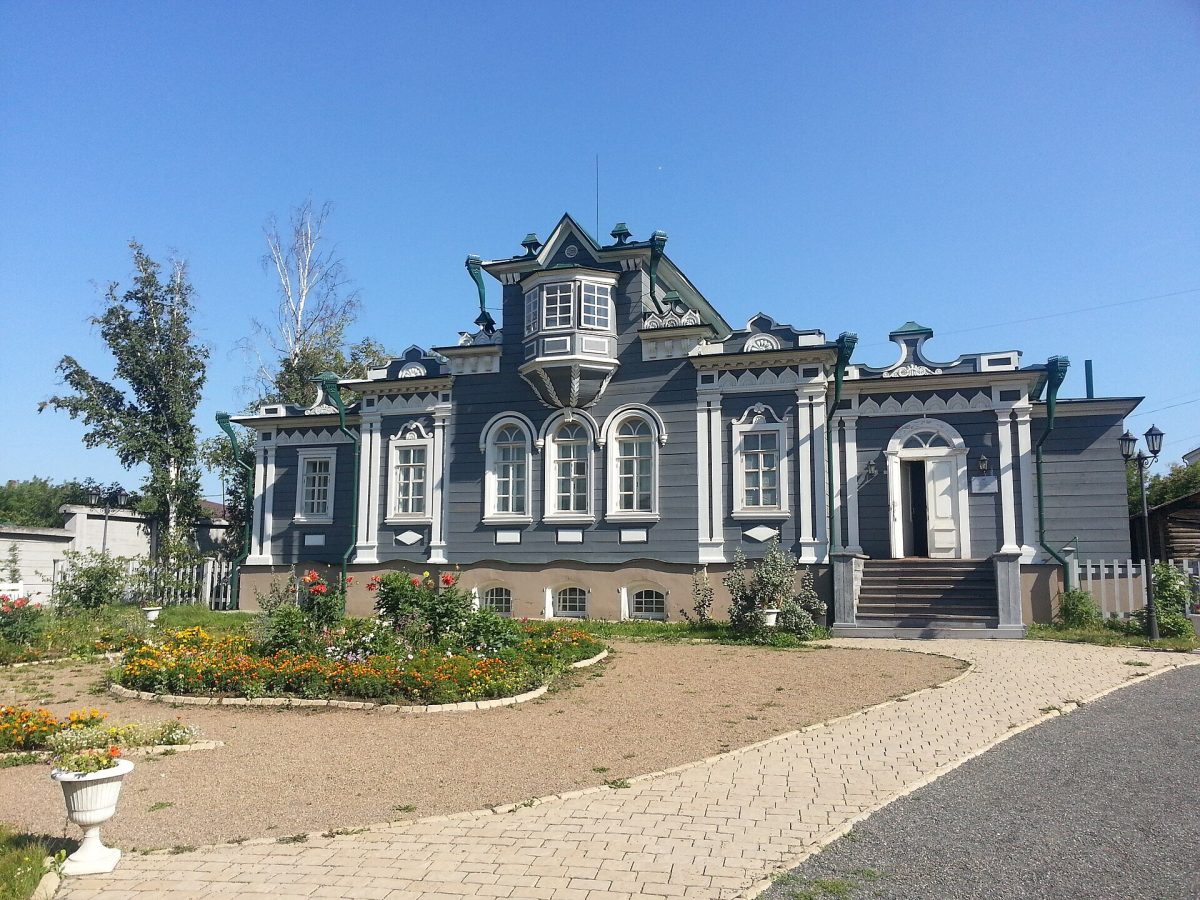 Photo: RyzhOl, CC BY-SA 4.0
Sergei Trubetskoy was a leader of the Decembrists’ Northern Society. His wife Ekaterina was the first of the Decembrist wives to follow her husband to Siberia, in 1826. The family settled in Irkutsk in the 1840s; Ekaterina died here in 1854. The museum shows furniture, portraits, personal belongings and the everyday life of a family in exile.
What to look for
Children’s things and schoolbooks: the Trubetskoys taught other people’s children as well as their own.
Opening hours & tickets: Opening hours and closing days are on the Decembrists Museum website.
Open in maps: OpenStreetMap · Yandex Maps · 2GIS Official website -
Stop 2 · Time here: 50 min
The Volkonsky House Museum
Getting there. A few blocks south-east into Volkonsky Lane, about 300 m.
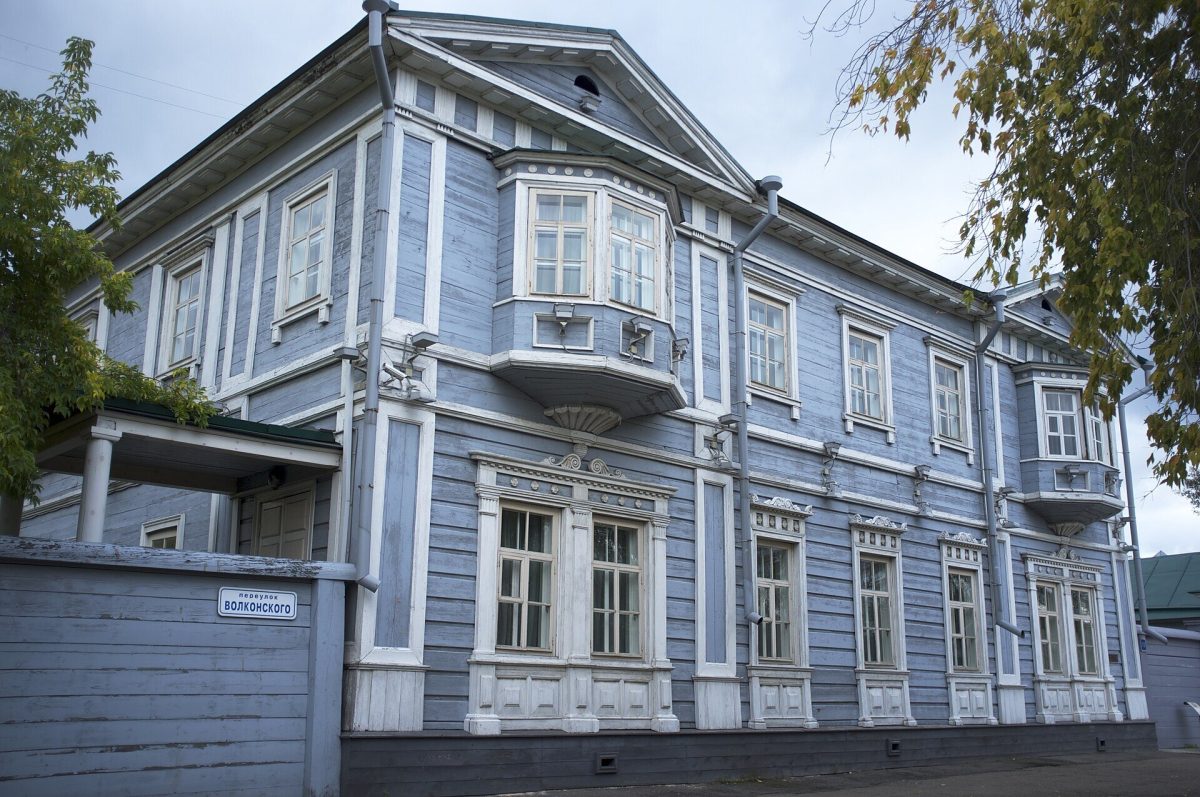 Photo: Aleksandr Zykov from Russia, CC BY-SA 2.0
The home of Prince Sergei Volkonsky and Maria Volkonskaya (née Raevskaya). The house is generally said to have been moved here from the village of Urik, where the family had lived in exile. Maria’s salon was one of the centres of social and musical life in mid-nineteenth-century Irkutsk, and music fills its hall again today.
What to look for
The piano and the music library in the drawing room; the estate’s outbuildings in the yard.
Opening hours & tickets: Opening hours and closing days are on the Decembrists Museum website.
Open in maps: OpenStreetMap · Yandex Maps · 2GIS Official website -
Stop 3 · Time here: 40 min
The Znamensky Convent: Ekaterina Trubetskaya’s grave
Getting there. North via Dekabrskikh Sobytiy Street and the Ushakovka bridge, about 1.8 km.
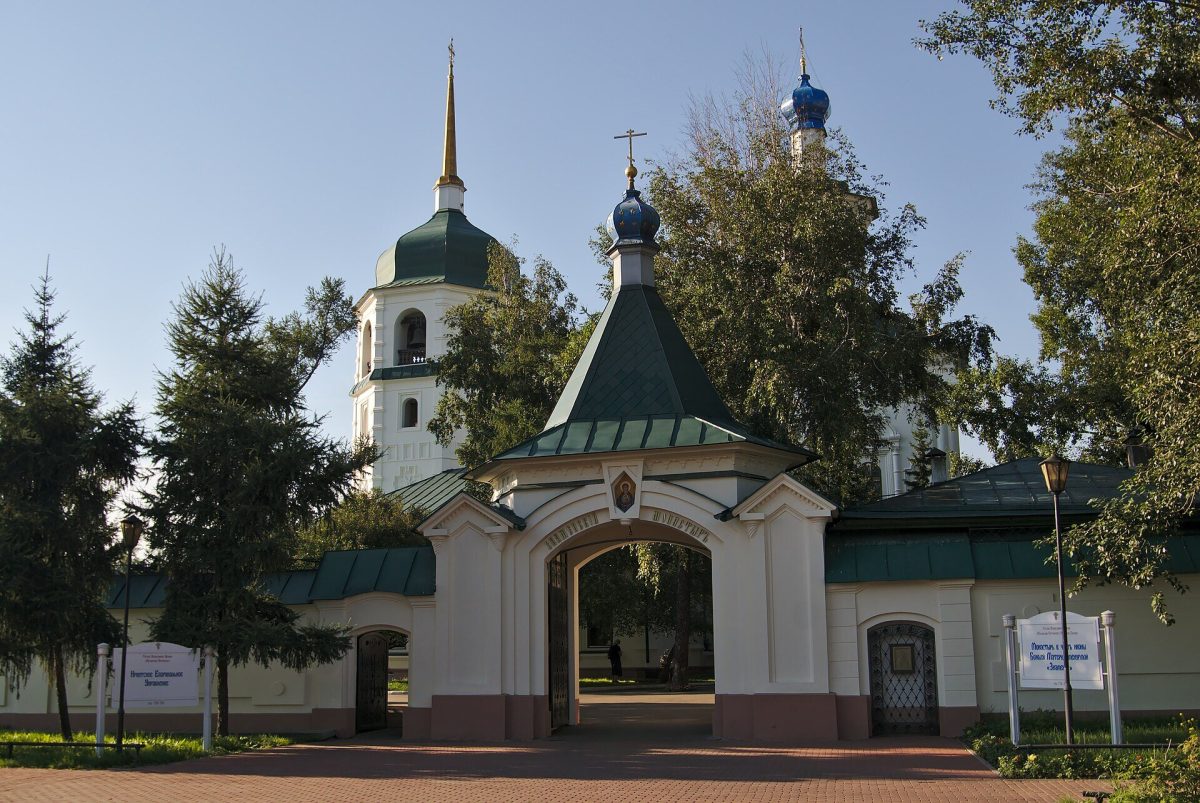 Photo: Alexander Klink, CC BY 4.0
Ekaterina Trubetskaya was buried at the Znamensky Convent with her children who had died young. Other Decembrists and members of their families lie here too, as does Grigory Shelikhov. The cemetery is a quiet place where the history of exile becomes intensely personal.
What to look for
Trubetskaya’s tombstone by the church wall.
Open in maps: OpenStreetMap · Yandex Maps · 2GIS -
Stop 4 · Time here: 15 min
The Polish Church
Getting there. Back over the bridge and west along the lower embankment, about 1.6 km.
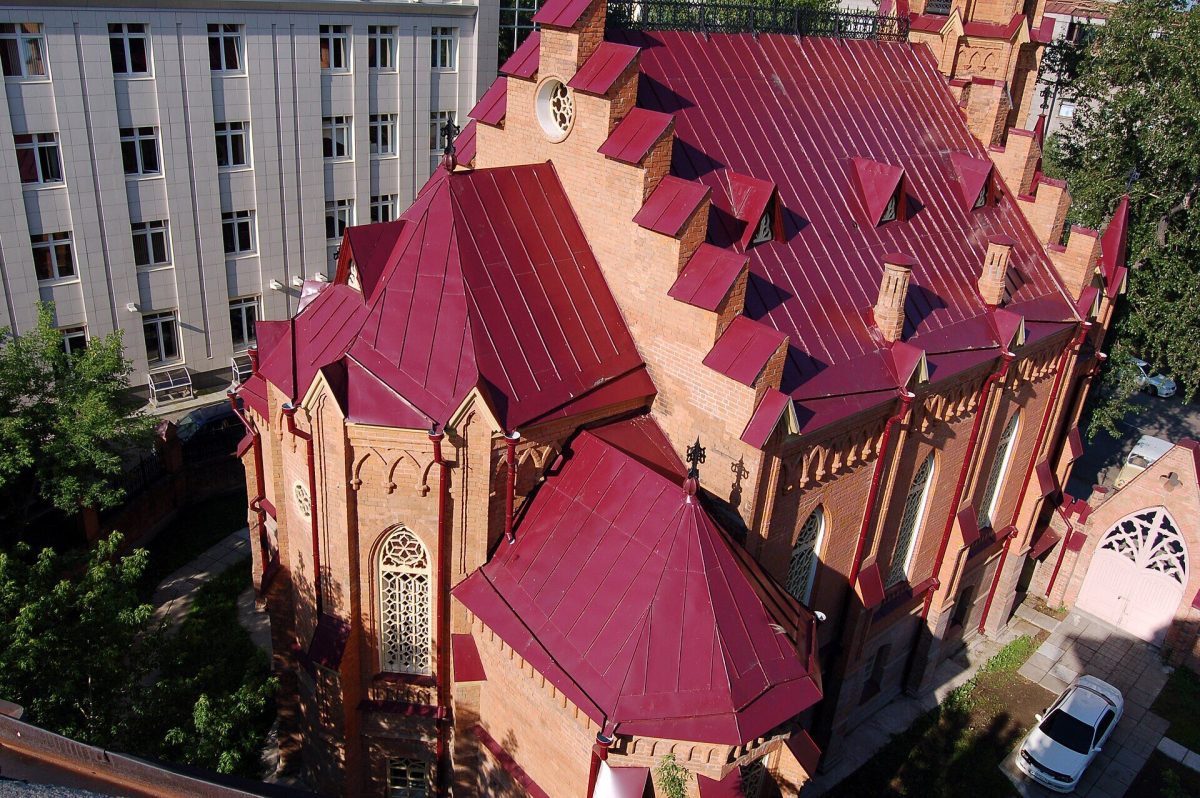 Photo: Yuri Getanov, CC BY 3.0
The church was paid for by the Polish community, many of whom were exiles from the uprisings of 1830 and 1863. Among the Poles exiled to Siberia were future celebrated scientists: the geologist Jan Czerski (Ivan Chersky), Aleksander Czekanowski, who explored the Lower Tunguska and Olenyok rivers, and the zoologist Benedykt Dybowski, who studied the fauna of Lake Baikal.
Open in maps: OpenStreetMap · Yandex Maps · 2GIS -
Stop 5 · Time here: 30 min
The Museum of Local Lore — the Geographical Society building
Getting there. Through Kirov Square and south along Karl Marx Street, about 1.6 km.
The building was put up for the East Siberian branch of the Russian Geographical Society. Exiled researchers worked with the society, set off on its expeditions and published in its journals. The explorers’ names on the facade are a fitting end to a route about how exile turned into science.
Opening hours & tickets: Check gallery opening with the museum.
Open in maps: OpenStreetMap · Yandex Maps · 2GIS (approximate location)
 Photo:
 Photo:
 Photo:
Practical tips
Transport
The start is 10 minutes’ walk from the bus station and 20 minutes from Kirov Square. It is about 1.8 km from the Volkonsky house to the Znamensky Convent; you can cover part of it by bus or taxi.
Practical tips
- Allow 45–60 minutes for each house museum.
- The Volkonsky house sometimes hosts chamber concerts — check the museum’s programme.
- Carry water: there are few cafés on the way to the convent.
Seasonal notes
An all-year route, as much of it is indoors. In winter the path to the convent along the Ushakovka can be icy.
Accessibility
Historic houses with porches and steps; ask the museum about access to the interiors.
Safety and caring for nature
Cross busy streets at crossings. In the convent keep quiet and follow the dress rules.
Budget
Admission to the house museums is set by the Decembrists Museum; the walk between them is free.
Photographs
Destinations: Irkutsk
Related routes

Museums and Cultural Irkutsk
Sukachev’s paintings, the Geographical Society’s collections, city history and a nineteenth-century estate
View itinerary: Museums and Cultural Irkutsk
Wooden Architecture and Merchant Houses
Carved window frames, lace-like eaves and houses sinking into the ground
View itinerary: Wooden Architecture and Merchant Houses
Churches, Monasteries and Religious Architecture
Siberian baroque, neo-Gothic, a synagogue and a mosque — a city of many faiths
View itinerary: Churches, Monasteries and Religious ArchitectureRead before you go
Culture & Traditions 2 min read
The Decembrist Wives: How Irkutsk Became Their City
Eleven women followed the condemned Decembrists to Siberia, giving up the lives they knew. Two of them — Ekaterina Trubetskaya and Maria Volkonskaya — spent years in…