
City walk · City history · Wooden architecture
Wooden Architecture and Merchant Houses
Carved window frames, lace-like eaves and houses sinking into the ground
Photo: Valentina Dyptan, CC BY-SA 4.0
- Duration
- 2.5–3.5 h
- Distance
- ≈ 3.6 kmcalculated on the OpenStreetMap footpath network
- Difficulty
- Easy
- Best season
- All year
- Getting around
- On foot
- Start
- The “Lace House”, Friedrich Engels St 21
- Finish
- The 130th Quarter, by the babr sculpture at the entrance
Irkutsk is one of the few large Russian cities where whole streets of nineteenth- and early twentieth-century wooden houses survive. This walk runs from the famous “Lace House” through quiet suburban streets to the estate of the patron Vladimir Sukachev, and ends in the rebuilt 130th Quarter.
About this route
People here did not build in wood because they were poor: timber was close at hand, and carpenters could turn a facade into a book of ornament. Window frames, eaves, cornices and gates advertised the owner’s wealth and taste. After the fire of 1879 the centre was rebuilt in stone, but in the suburbs wood remained the main material.
Many of the houses you will see are lived in. Look from the street, do not walk into courtyards uninvited, and do not photograph residents at their windows.
The interactive map is unavailable — below is a sketch of the route and the full written itinerary.
The route line was calculated on the OpenStreetMap footpath network and has not been checked on the ground by our editors. The map mirrors the list of stops below; all information is available without the map.
Step-by-step itinerary
-
Stop 1 · Time here: 20 min
The “Lace House” (Shastin house)
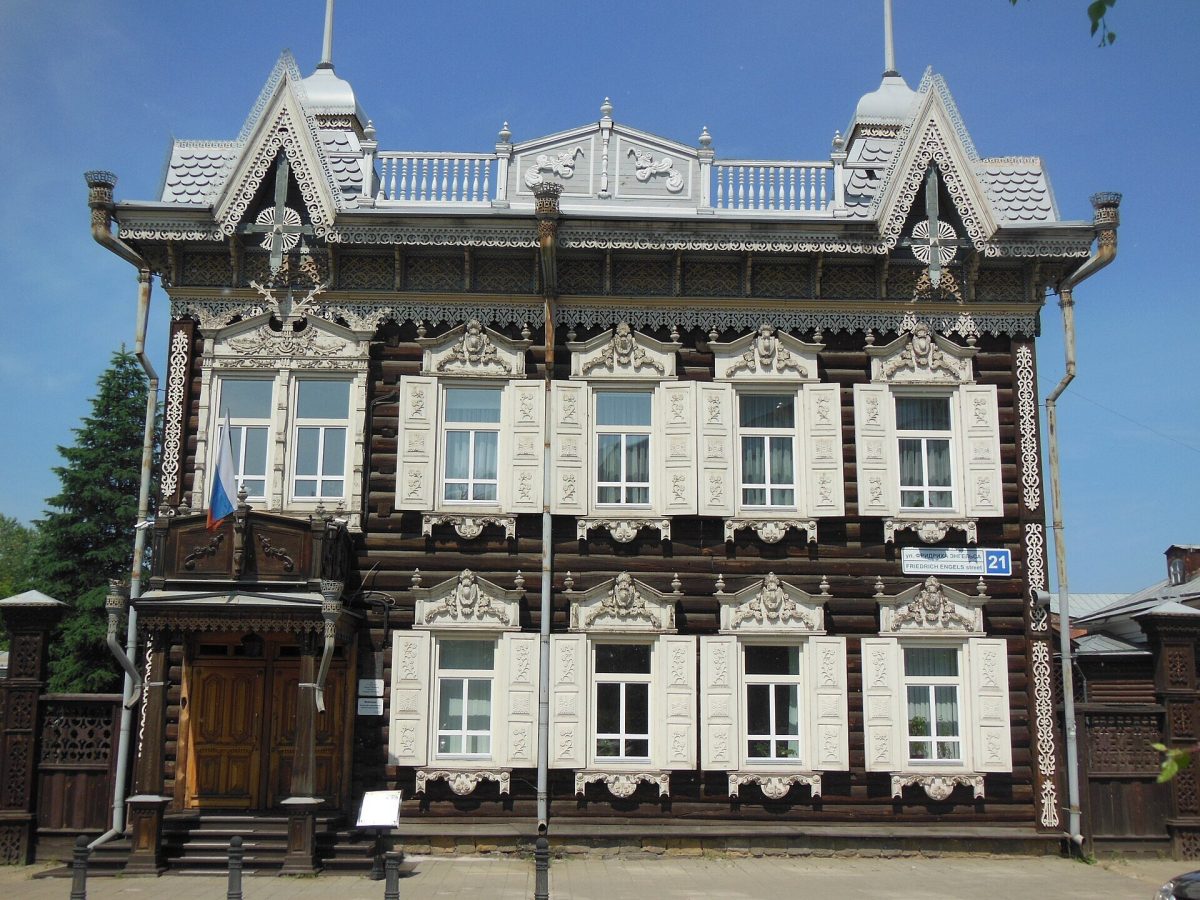 Photo: Valentina Dyptan, CC BY-SA 4.0
The most famous wooden house in Irkutsk was built in the early twentieth century. Its facade is almost entirely covered in fretwork — fine patterns sawn out of boards, which from a distance really do look like lace. It now houses a cultural centre.
What to look for
The repeated motifs on the gable and cornice: the carver built a complex pattern out of a few simple elements.
Tip
Step across to the opposite pavement to fit the whole facade into your frame.
Open in maps: OpenStreetMap · Yandex Maps · 2GIS -
Stop 2 · Time here: 15 min
The merchant Polkanov’s house, Dekabrskikh Sobytiy Street
Getting there. Round the corner into Dekabrskikh Sobytiy Street — about 100 m.
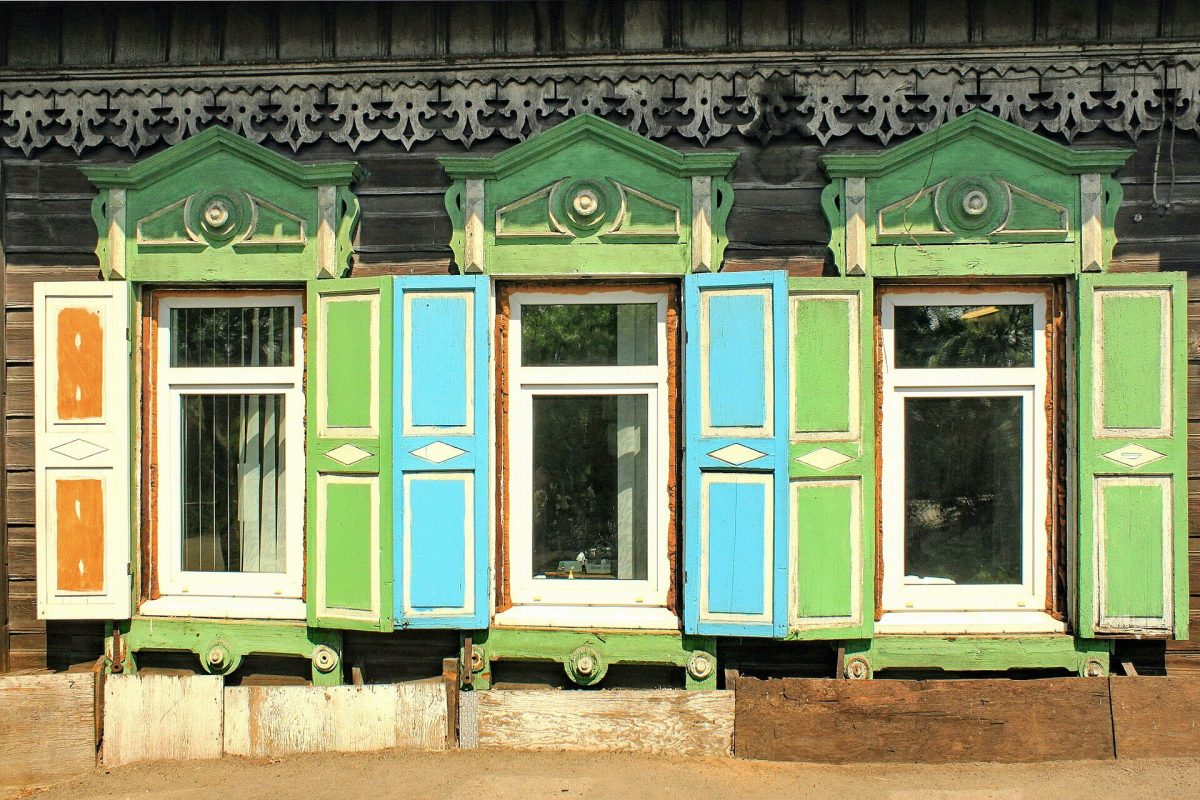 Photo: Marcin Konsek, CC BY-SA 4.0
Dekabrskikh Sobytiy (“December Events”) Street is one of the most wooden streets in Irkutsk. Its name refers not to the Decembrists, as people often assume, but to the armed clashes in the city in December 1917. Merchant houses stand side by side with simple cottages, and you can trace changing tastes from restrained classical window frames to lavish Art Nouveau.
What to look for
The shutters: their colour and form often tell you when the house was last renovated.
Open in maps: OpenStreetMap · Yandex Maps · 2GIS -
Stop 3 · Time here: 30 min
Through the wooden neighbourhood
Getting there. Walk south-east along Dekabrskikh Sobytiy Street, detouring into the side lanes.
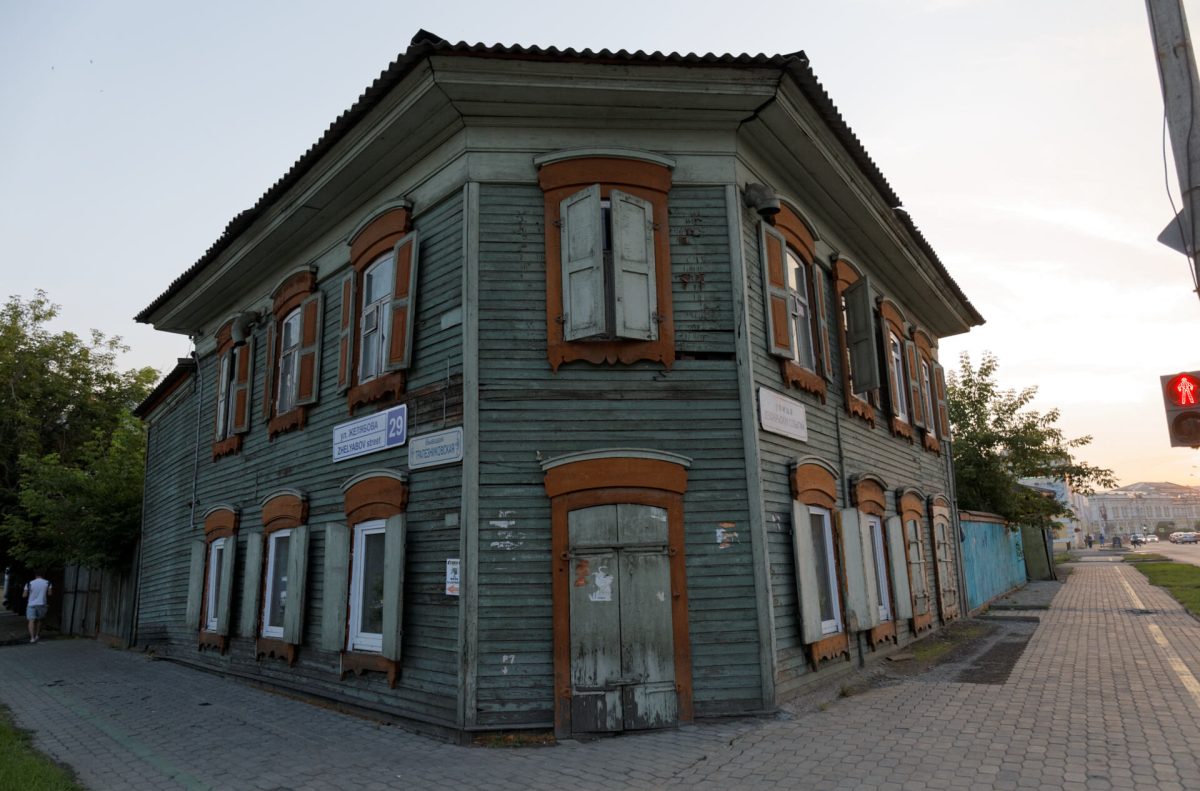 Photo: Sergio Tittarini from Shanghai, China, CC BY 2.0
This stretch is not one sight but a whole environment: two-storey houses with attic rooms, gates with wicket doors, front gardens. Notice the corner houses — they were often more ornate, because they could be seen from two streets.
What to look for
Windows almost at ground level: these are houses around which the street has risen over 150 years.
Tip
Do not wander into courtyards — they are private.
Open in maps: OpenStreetMap · Yandex Maps · 2GIS (approximate location) -
Stop 4 · Time here: 45 min
The Sukachev estate
Getting there. Along Dekabrskikh Sobytiy Street to number 112, about 1 km from the previous stop.
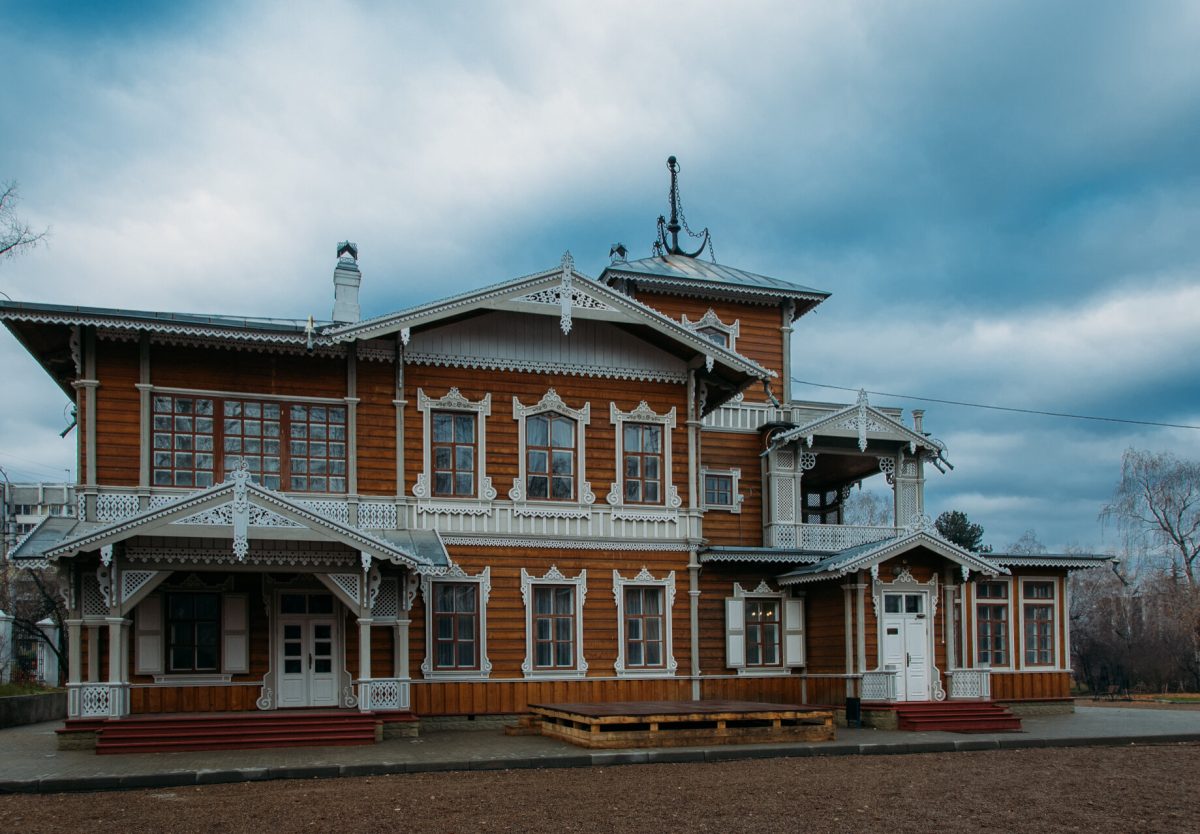 Photo: Eugene Ostroumov, CC BY-SA 4.0
Vladimir Sukachev was mayor of Irkutsk from 1885 to 1898 and a collector of paintings; his collection became the core of the regional art museum. His estate — main house, outbuildings and garden — survives almost complete and shows how a wealthy Irkutsk family lived at the end of the nineteenth century.
What to look for
The carved gazebo in the garden and the veranda of the main house.
Opening hours & tickets: A museum; check opening hours and ticket prices on the art museum’s website.
Open in maps: OpenStreetMap · Yandex Maps · 2GIS Official website -
Stop 5 · Time here: 40 min
The 130th Quarter
Getting there. About 2 km west via Timiryazeva and Sedova streets, or by public transport.
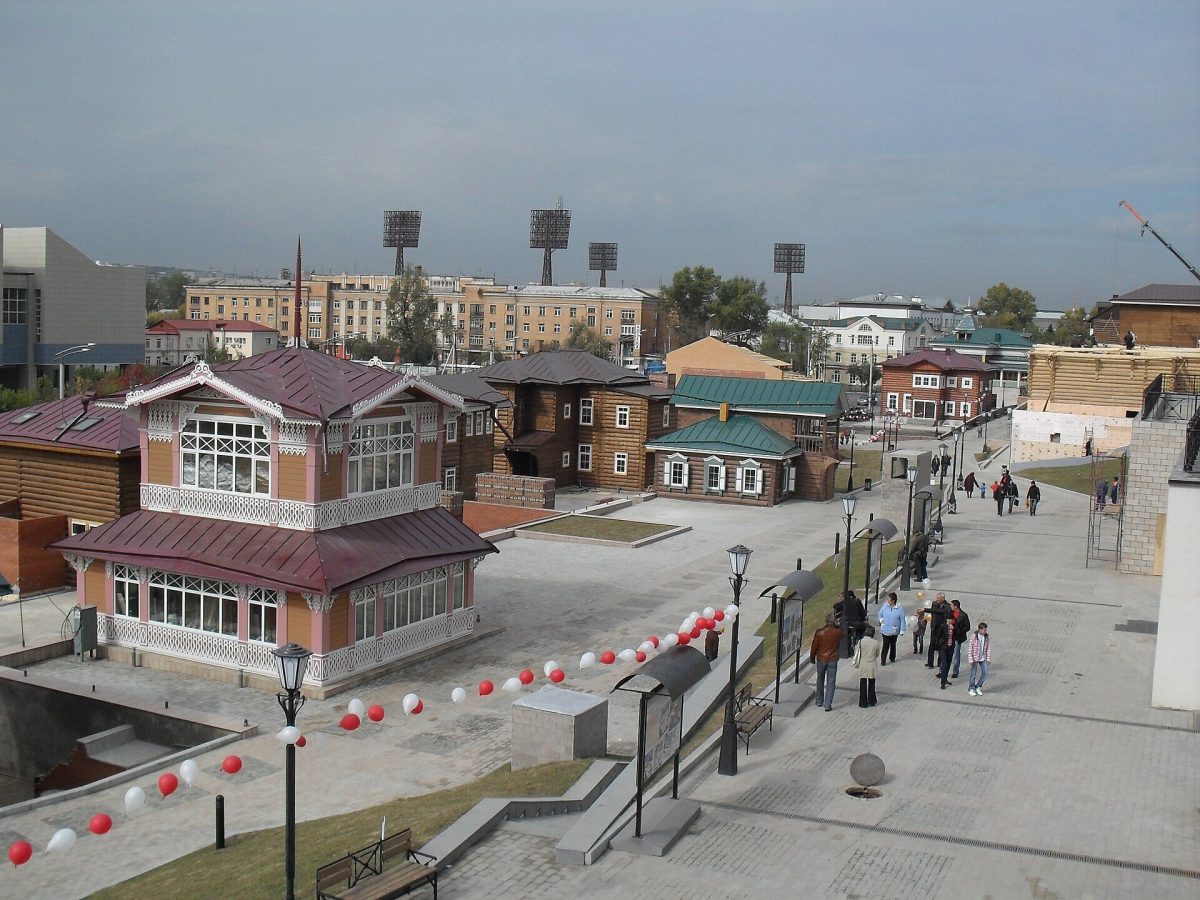 Photo: Fanzuga, Public domain
The quarter opened in 2011 for the city’s 350th anniversary. Some houses are restored historic buildings, others were newly built in the “old” style. It is not an open-air museum in the strict sense but a pedestrian street of restaurants and shops — worth keeping the distinction in mind. At the entrance stands a sculpture of the babr, the beast from the Irkutsk coat of arms.
What to look for
Look for the plaques that tell you which buildings are historic and which are new.
Tip
The babr is a Siberian tiger with a sable in its jaws. Thanks to a clerical slip in the nineteenth century, it was long drawn looking more like a beaver.
Open in maps: OpenStreetMap · Yandex Maps · 2GIS (approximate location)
 Photo:
Practical tips
Transport
The start is a 5-minute walk from the bus station or about 25 minutes on foot from Kirov Square. From the 130th Quarter it is 15 minutes’ walk or a few tram stops back to the centre.
Practical tips
- The best light for carving is morning and evening, when shadows bring out the relief.
- Look at the height of the windows: many houses have “sunk” as the ground around them rose over a century and a half.
- The 130th Quarter has cafés — a good place to finish.
Seasonal notes
In winter snow sharpens the graphic lines of the carving and woodsmoke rises from chimneys. In summer the streets are green, though leaves can hide the facades.
Accessibility
Pavements in the old suburb are narrow and uneven in places, with some steps and slopes. The route is difficult with a wheelchair or pushchair; the 130th Quarter itself is pedestrianised and level.
Safety and caring for nature
Wooden houses burn — do not smoke close to them. In winter snow and icicles fall from roofs: do not stand right against the walls.
Budget
The walk is free; the Sukachev estate charges museum admission.
Photographs
 Photo: Marcin Konsek, CC BY-SA 4.0
 Photo: Sergio Tittarini from Shanghai, China, CC BY 2.0
 Photo: Eugene Ostroumov, CC BY-SA 4.0
 Photo: Trasprd, CC BY-SA 4.0
Destinations: Irkutsk
Related routes
Irkutsk Through Its Streets and Courtyards
Apartment houses, the central market, pedestrian Uritskogo Street and quiet Jerusalem Hill
View itinerary: Irkutsk Through Its Streets and Courtyards
The Historic Centre of Irkutsk
From the Moscow Gate to the White House: three centuries in one walk
View itinerary: The Historic Centre of Irkutsk
The Decembrists and the History of Siberian Exile
The Volkonsky and Trubetskoy houses, Princess Trubetskaya’s grave and a city of exiled scholars
View itinerary: The Decembrists and the History of Siberian ExileRead before you go
Architecture & Heritage 2 min read
How to Read an Irkutsk Wooden House
The wooden houses of Irkutsk are not decoration but a language in which owners told passers-by about themselves. This short glossary will help you tell relief carving…