
Winter Baikal means clear ice laced with cracks, pressure ridges, ice grottoes and sunshine almost every day. When to go, where to see the ice and which safety rules you must never break.
When to go
Baikal freezes gradually, usually by January; the source of the Angara never freezes at all. The best time for an ice trip is from mid-February to late March: the ice is thick, the days are longer and there is plenty of sunshine. In April the ice starts to break up, and going onto it becomes dangerous.
Why the ice is clear
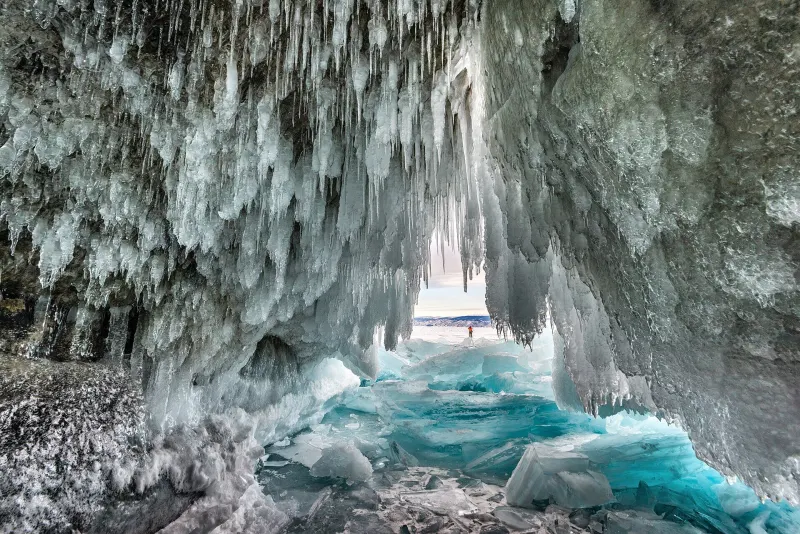
Winter brings little snow to Baikal, and strong winds blow what falls off the surface. So the ice often stays smooth and transparent: you can see the water beneath, frozen gas bubbles and cracks running deep. Where wind and shifting ice break the surface, pressure ridges of piled-up slabs rise up.
Where to see it
- Olkhon and the Maloye More — grottoes, frozen spray on the capes, clear ice.
- Bolshoye Goloustnoye — smooth ice not far from Irkutsk.
- Listvyanka — the Angara source steaming in the frost (the source itself never freezes).
Safety rules
- Use only official ice crossings and routes opened by the authorities. Follow emergency-service announcements.
- Never drive onto the ice on your own. Cracks and open water appear at any time in winter; every winter vehicles break through the ice on Baikal.
- Avoid the Angara source and river mouths — currents erode the ice from below.
- Keep away from cracks — even if they look narrow.
- Respect the wind. The sarma on the Maloye More can reach hurricane strength.
Baikal ice “talks”: cracks open with booms and creaks, especially on a frosty night. It is beautiful — and a reminder that the ice is alive.
What to bring
- Layers, a down jacket, warm boots and ice grips or crampons for walking on smooth ice.
- Sunglasses and sunscreen — sun reflected off ice is dazzling.
- Spare batteries: they drain fast in the cold.


