
Baikal cuisine means fish from the lake, Buryat pozy, pine nuts and taiga berries. Here is what to try, how it is eaten — and why, since 2017, it pays to be careful about omul.
Omul
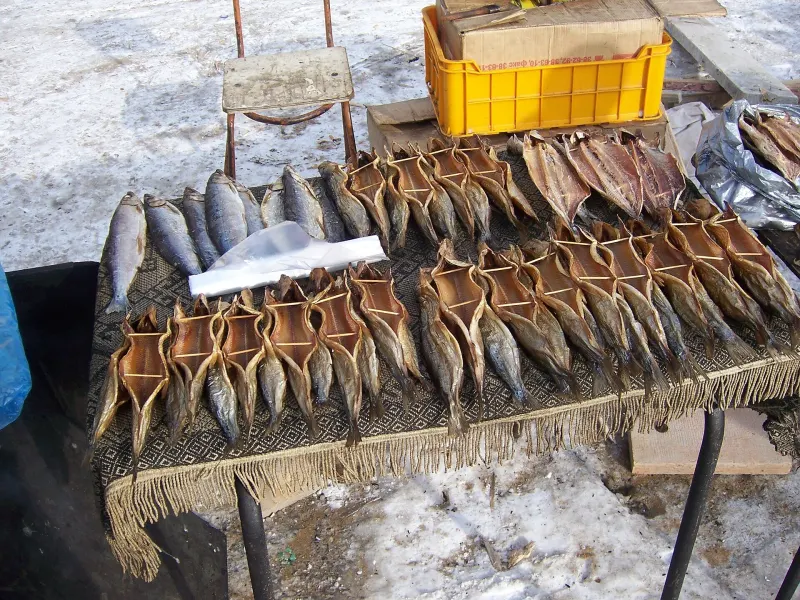
Omul is an endemic Baikal fish of the salmon family and the emblem of local cooking. It is hot- and cold-smoked, salted, roasted on a stick over a fire, and eaten as raskolotka — frozen, broken into pieces and salted.
Since October 2017 catching Baikal omul has been heavily restricted to let the population recover. You will still see smoked fish at the markets, but ask what it is and where it comes from: other species are often sold as omul. Local whitefish, grayling and other fish are worthy alternatives.
Pozy (buuzy)
Pozy are Buryat steamed dumplings filled with chopped meat and onion, pinched closed at the top with a small opening. They are eaten by hand: bite carefully, sip the broth, then eat the rest. Some of the best are served in roadside cafés on the way to Olkhon.
Gifts of the taiga
- Pine nuts — the seeds of the Siberian pine, sold in the cone or shelled.
- Berries — lingonberry, bilberry, bog bilberry, honeysuckle and sea buckthorn; fresh in summer, frozen or as jam in winter.
- Bird-cherry flour — ground from dried bird-cherry fruit, stones and all; it makes a Siberian cake with a distinctive almond flavour.
- Ivan-chai — a herbal tea made from fireweed.
Where to try it
- The Central Market in Irkutsk — berries, nuts, dairy.
- The fish market in Listvyanka — smoked fish.
- Buryat cafés in Irkutsk and on the road to Olkhon — pozy.


